The world will never be the same after COVID-19. One of the biggest tech trends in healthcare has been the rapid rise of telemedicine. The epidemic has not only moved us from our working desks to home tables at home. It has also changed how we treat our health and what we expect from healthcare services. So, hands down, over the last few years, telemedicine has made tremendous growth.
But what should we expect from 2026?
First of all, investors will be more meticulous about their investment choices. So being on top of healthcare technology trends is a must.
Before plunging into startup development, it pays to explore healthcare tech trends, like AI, Biodata, or Telemedicine. Believe me, this is an exciting journey, and you couldn’t choose a better guide to make it than this article.
So let’s dig right in!
Healthcare Tech Trend 1: AI
Of course, we are starting with AI development! Well, it's just hard to overestimate the influence of AI tech trends on the healthcare industry. AI already supports both clinical work and daily operations, helping providers improve speed, accuracy, and access to care.
A strong example from our own experience is a Medical Documents Processing System built by Uptech for a private diagnostic clinic in the USA. We developed a HIPAA-compliant AI pipeline with self-hosted LLMs and OCR to process millions of medical documents. The solution reduced processing time by 34%, doubled monthly patient capacity, and improved overall patient service satisfaction. This shows how AI can solve operational bottlenecks, not only clinical ones.
AI in healthcare is used to:
- Facilitate the development of meds, allowing for forecasting the results of tests and possible side effects
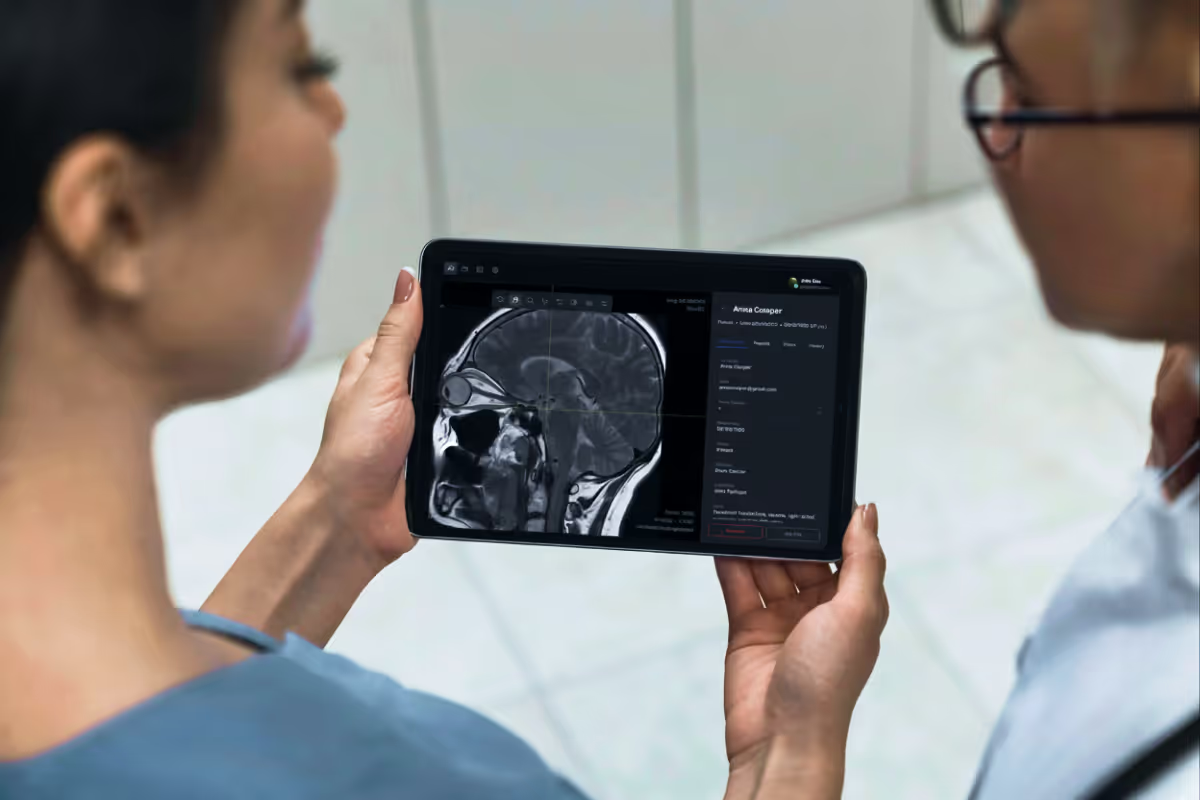
- Detect early signs of disease on X-ray and MRI scans
- Treat neurodegenerative diseases like Parkinson's and Alzheimer's

Besides that, AI can help doctors detect disease more accurately by analyzing past medical data and patterns that may be easy to miss during manual review. In breast cancer ultrasound diagnostics, a 2021 study published in Nature Communications found that AI support reduced false positives by 37.3% for radiologists. It also lowered unnecessary biopsy recommendations by 27.8%, while keeping the same level of sensitivity. This means fewer false alarms without missing real cases.
AI virtual healthcare assistants are also a part of AI-driven medicine. They help patients book appointments, receive medication reminders, check symptoms, and get answers to common health questions at any time of day. For healthcare providers, they reduce routine administrative work and free up staff for cases that need human attention.
Besides direct disease prevention and treatment, AI can also help solve the problem of a shortage of personnel and long appointment delays. In 2025, the average wait time for a new patient appointment across 15 major US cities reached 31 days. AI tools can reduce this pressure through appointment scheduling, documentation, patient triage, and communication support. This gives doctors more time to focus on care.
AI-based systems can take patients' surveys, examine their medical histories, and test results. As a result, medical professionals get all the information already processed by AI. Based on this data, the professionals decide on the diagnosis and treatment.
Such AI-based automation can significantly optimize processes and improve the quality of healthcare services.
The healthcare startups that leverage the power of AI healthcare technology include:
- Babylon Health – an AI-driven digital service provider that connects healthcare professionals with patients on a web and mobile application
- Freenome Inc. – an AI-driven startup that helps to detect patterns in extracellular biomarkers for an early cancer diagnosis
- Recursion Pharmaceuticals – a startup using AI in the development of new medications
- BenevolentAI – software development for Machine Learning to facilitate the process of medication development
- Healthy.io – a startup leveraging computer vision technology in urine results analysis
According to Morgan Stanley, AI could help the U.S. healthcare system save between $400 billion and $1.5 trillion by 2050. Hospitals alone may reduce costs by 10% to 20%, which equals roughly $300 billion to $900 billion in savings.
Healthcare Tech Trend 2: Digital Care Marketplaces
Nowadays, healthcare marketplaces have already become a part of people’s lives. Surfing the marketplaces, users can browse physicians, couches, psychological analytics, or any type of healthcare specialist they need. Platforms such as Zocdoc, Healthgrades, Doctolib, and BetterHelp show how people already use digital services to find care, compare providers, and book appointments online.
However, it is anticipated that there will be an increase in mobile marketplaces that will offer open-source integration (like in fintech with open banking). The open-source integration will allow different companies to work towards digital solutions in approving diagnosis, workflow, and reporting.
In practice, this can connect appointment systems, insurance verification, lab results, e-prescriptions, and patient records across multiple providers. It can also reduce manual data entry, shorten wait times, and improve the overall patient experience.
Healthcare Tech Trend 3: Biodata and… AI Again
One of the most significant technology trends in healthcare is biodata. This is data that will dynamically gather information from different users’ devices: smart watches, smart thermometers, fitness trackers, blood pressure monitors, etc.
The thing is that the healthcare industry alone produces enormous amounts of data. Usually, they are stored in the so-called EHR (Electronic Health Records) and cover demographic information, progress records, and prescriptions. This is why reliable EHR integration has become a priority for healthcare providers who want connected systems and faster access to patient data.
AI can further analyze this information and produce health recommendations, forecasting the probability of a particular disease or deviation in development.
In a more global context, data analytics can be utilized to streamline specific trends and boost healthcare development. For example, the information from cancer treatment taken from billions of patients can provide insights into improving existing approaches to cure the disease.
Here are the 7 ways to develop a HIPAA compliant software.
Check out our expert guide!
Healthcare Tech Trend 4: Telemedicine
Humans have a common tendency to find positive things even in global upheavals like COVID-19. So, one of the positive results that the COVID-19 era has brought to the table is telemedicine app development.
Telemedicine is the term used to describe the delivery of healthcare services online using electronic information, software, and hardware technology (like cameras, computers, videoconferencing, etc). One of the biggest benefits of telemedicine healthcare trends is a relatively low development cost if there is already developed infrastructure: video-conferencing and information exchange tools.
For patients, the telemedicine healthcare trend has unveiled many opportunities:
- Minimization of infection risks.
- On-demand access to medical advice.
- Access to highly-qualified professionals, regardless of the location.
- Having alternative opinions.
- The economy of time and money.

The global telemedicine market is valued at $160.13 billion in 2025 and is projected to reach $806.89 billion by 2035, with a 17.55% CAGR over the forecast period. Here are examples of some telemedicine startups:
- MDLIVE – a telehealth provider and on-demand delivery of medications app
- Lemonaid – medication delivery app
- LiveHealth – a platform to connect with physicians, allergist or psychiatrist or therapists
- Amwell – an on-demand healthcare app
- GoodRx – a service providing treatment recommendations
- CureApp – some telemedicine apps to help in the treatment of different diseases
- Gennev – video consultations with gynecologists for women
Look at HealthTap – a typical e-health app for iOS and Android. The app provides access to 50k medical professionals, each with specific skills and a rating. The system is designed so that the patient gets medical help in the shortest amount of time.
Healthcare Tech Trend 5: Medication Development
New forms of medications are another healthcare tech trend that is hard to believe at first. Just check out “the smart pill” technology that uses mini robots that are out in a capsule no bigger than a usual Vitamin D capsule. This is not an episode of a fantasy movie. This is a fundamental technology developed by the Rani Therapeutics startup, founded by Mir Imran.
Once the capsule enters the human gut, the stomach's walls absorb it, and the robot begins its trip around the human organism. That said, the capsule is remotely controlled, so the pill can get to the most hard-to-reach parts of the human body and run specific manipulations there.
Such robots are used to cure the GI tract and can even stop internal bleeding.
Healthcare Tech Trend 6: Personalized Medicine
The essence of personalized medicine healthcare tech trend is in considering the patient’s genetic, physiological, and other individual characteristics when choosing the treatment approach. This method is based on using innovative biological IT and Nanotechnologies.
Personalized medicine already plays an important role in areas such as oncology, cardiology, rare disease treatment, and medication dosing. Genetic testing can help identify cancer mutations, predict side effects, or show which drugs may work better for a specific person. As data tools improve, this healthcare tech trend is expected to become more common in everyday care.
Companies that offer a personalized medicine approach:
- Encellin – implanted sensors for treating and controlling the patient’s health
- InsightRX – a platform for predictive analytics, which includes the principles of quantitative pharmacology and machine learning to understand the individual reaction of the patient to the specific treatment
Beyond clinical treatment, personalization also applies to digital products. For example, recommendation systems can match users with relevant services, content, or care options. If you’d like to explore the broader business side of personalization, see our guide on how to build a recommendation system.
Healthcare Tech Trend 7: AR/VR
AR and VR are no longer new buzzwords, but they remain an important healthcare tech trend.
The major role that the AR/VR tech trend plays in healthcare is improving processes via virtual environments and providing medical services. Hospitals and clinics use these tools for medical training, surgical simulation, patient education, pain control, mental health therapy, and physical rehabilitation. Medical students can practice complex procedures in a risk-free setting before working with real patients.
Virtual reality settings are especially effective in recovering from trauma, anxiety, and physical injuries, as they create controlled environments for therapy and gradual exposure treatment.
VR is also used to distract patients during painful procedures and lower stress levels. AR can help surgeons view 3D anatomical models during operations, improve precision, or share live procedures with other specialists to receive instant advice. In rehabilitation, motion-based VR programs can motivate patients to complete exercises more consistently. As hardware becomes more affordable, AR and VR continue to move from experimentation to real clinical use.
Looking for professional developers for your healthcare project?
Here's how to find the best ones!
Healthcare Tech Trend 8: Cloud Computing
Patient data is growing incessantly. And there has been a massive spike in this growth, and healthcare vendors have faced the challenge of managing this volume of information.
EMR (electronic medical records) and EHR (electronic health records) are both cloud-based technologies that make storing and managing patients’ treatment histories, vaccinations, test results, and other medical data easier.
Unlike local servers, cloud solutions have many benefits:
- Scalability. Doctors can quickly scale up or diminish the volume of resources they need depending on the workflow.
- Cost-effectiveness. Many clouds work by the “usage payment” principle: you do not have to pay the extra cost when the volume of resources you use is smaller.
- Functionality. Using AI and ML technology, cloud systems can process data faster.
- Security. Clouds integrate powerful cybersecurity instruments to prevent leaks or unauthorized access.

Healthcare Tech Trend 9: DNA–Based Medical Prescription
Biohacking & Gene Editing is an up-and-coming field that allows doctors to explore one’s genes and how they influence health. DNA can be used in medical tests, based on which a human can learn which medications suit them best.
23andMe is a US health tech startup founded by Ann Wojcicki. The startup provides remote DNA examinations based on collected biomaterials.
The patient gets a lab kit for saliva sample collection by mail. A few weeks after the examination, the patient receives his genetic information. That all is worth $99.
Another startup leveraging DNA investigations is Invitae. The company conducts tests to explore the genes in patients’ DNA to spot any changes that can potentially lead to disease
Healthcare Tech Trend 10: Digital Therapeutics
Just imagine: instead of medications, the doctors prescribe a… mobile app!
This is precisely what Digiceuticals brings to the table.
Digiceuticals or digital therapeutics healthcare trend is an industry with high potential. It covers the methods and instruments in the treatment of neurotic disorders, in particular post-traumatic stress syndrome. Now, there are applications where doctors can track the patient's psychological state and even make corrections to it.
Some apps can track the sleeping routine of the patients. And some apps use a game to make modifications that influence the human brain, lowering anxiety rates, for example.
What is essential in apps like Digiceuticals is a feeling of connection and support with a medicare specialist. The Uptech team realized this during one of our market research studies for our mental health app case.
So in the mental health app we developed, we provided instant communication access to all users. Thus, we developed such features:
- Instant chat with medical professionals via Sendbird chat
- In-app user calls
- In-app calendar to schedule user calls
- An educational platform with video tutorials, quizzes, and a mental health community of like-minded individuals
We at Uptech are firm believers in the power of deep-dive research and identifying users’ needs. Thanks to thorough research, we developed an app that brought a feeling of human connection to the users, which made the product valuable.
Healthcare Tech Trend 11: Patient Experience
The user-centered approach has already become the backbone of any digital service, especially when it comes to mobile apps. No wonder that is happening! As patients have a broad list of providers, the latest should focus on quality, technologically-based services.
As for the healthcare industry, the patient’s experience is becoming the spotlight. Today, not only are technologies used to improve the patient’s overall experience. The user is also becoming more engaged in the healthcare system.
According to the research, 84% of people want their customer support issues to be solved quickly. When choosing the software development partner, they will favor the one committed to providing a quality patient experience.
A good example is Clearly, a mental health marketplace built with participation from Uptech’s R&D Lab. The platform helps people find qualified therapists, book sessions, and attend therapy online through web, iOS, and Android apps. It was first launched as a lean MVP, then scaled into a full product after market validation.
To improve patient experience, the team focused on frictionless onboarding, therapist discovery, session booking, secure video calls, and cross-platform consistency. Product analytics and user behavior data helped guide UX improvements and conversion optimization.
Today, Clearly supports 30,000+ therapy sessions per month and shows how this healthcare tech trend can turn patient experience into real business growth. In modern healthcare, convenience and trust matter almost as much as treatment itself.
Want to Make a Top-Notch Healthcare App? Here Is Why Uptech Is The Right Team
There will be no promotional fluffy stuff here. Two bare facts only.

We Know How It Feels
Firstly, Uptech has years of experience in software product development. But not only do we develop products for our clients. We also brainstorm, discover, and launch startups in our R&D team. Among them, there are:
- A mental health platform called Clearly
- A performance management platform, Plai (which, by the way, won Google Funding for startup growth)
The Uptech team knows exactly how it feels to build your own product, from the idea to the growth stage. Also, we know what it takes to build a healthcare app that reaches out to users’ hearts.
We know how it feels, so we treat our clients’ projects like our own!
We Have Experience in Healthcare
Another pro to cooperate with Uptech on a healthcare app – we know the business very well.
Our team is experienced in building full-scale healthcare products for medical professionals, labs, hospitals, healthcare startups, etc.
Telemedicine, mHealth, or the Internet of Medical Things are not just buzzwords for us. We know exactly how to use and apply those healthcare trends to the real web or mobile app.
But enough of the pompous words. Check our mental health app case and make your own judgment!

Conclusion
Today, in times of massive competition in the market, healthcare startups should focus on users’ needs considerably. Now it is not only about building a great product with advanced functionality. What is required today is also a product that meets users' needs.
Contact us and learn more about building a healthcare product that users like.



































.avif)