Finding a web developer who truly meets your needs is not easy.
About 71% of U.S. employers say they struggle to find skilled workers — up from roughly 40% a decade ago.
A strong match depends on several factors aligning at once: solid technical skills, clear communication, enough flexibility, and the right working model: remote, on-site, or hybrid. Miss any one of these, and the partnership often breaks down.
So how do you avoid that?
Drawing on my background as a Business Development Manager, I’ll share my insight on:
- How to hire a strong web developer
- What types of developers do you need based on your project
- How to run effective candidate research
- How to build a productive, long-term partnership with your development team
Let’s get started.
Things to Figure Out Before Hiring a Web Developer
So you have decided to hire a developer. What’s next?
First and foremost, ask yourself a few questions to figure out who you want to see on your project.
What’s your product’s vision?
At this stage, the goal is to make sure the developer you hire aligns with your product goals and the type of work ahead.
To do that, focus on a few practical alignment questions.
1) Where will most of the development work sit?
Think about which parts of the product will require the most effort in the near term.
For example:
- User interface and customer-facing features
- Backend logic and system functionality
- Integrations with third-party services
- Data handling or processing
You should also identify the core flows that must work reliably at launch — such as payments, bookings, or account access — since these often shape the level of experience you need.
This helps determine whether you’re looking for a frontend specialist, backend engineer, or a more system-focused developer.
2) How complex is the product technically?
You don’t need a full architecture mapped out, but you should understand whether the build involves added complexity.
Consider factors like:
- Third-party integrations
- Real-time functionality
- Permission systems
- Sensitive or regulated data
- Legacy infrastructure dependencies
Also assess how stable your requirements are today. If the scope is well-defined, you may only need execution support. If it’s evolving, you’ll need someone comfortable making technical decisions along the way.
3) What constraints shape the work?
Every project has boundaries that affect hiring decisions.
For example:
- Do you need to ship quickly, or prioritize long-term scalability?
- Are there security or compliance requirements involved?
- Are there performance or uptime expectations tied to launch?
Understanding these constraints helps you set realistic expectations around seniority, ownership, and delivery pace.
Why this matters for hiring
You’re not hiring based on product vision alone — you’re hiring based on how that vision translates into engineering work.
Once you understand where development effort sits, how complex the system is, and what constraints exist, it becomes much easier to define the role and choose the right developer for the job.
Why are you hiring?
What work needs support right now?
- What must be completed in a long-term perspective? Describe results that can be reviewed or shipped.
- What problem is this hire meant to solve? Building something new, improving a working system, or fixing issues in production?
- What matters most in this cooperation? Fast delivery, reliable performance, or preparation for future scale?
Based on the answers, you need to figure out what you expect from a new employee at this stage of the project development. Maybe you want them to take on some critical processes, become a team lead, or even manage a team of foreign freelancers — all of these factors influence your choice.

What are your expectations?
Just imagine: a new web developer joins your web development team. So what’s next? How do you see the result in 6 months or a year?
How will this person fit into your team and processes?
- What strengths already exist on the team?
- What responsibilities will this hire own?
- How will collaboration work day to day?
- Who reviews their work?
- Who unblocks them when issues arise?
How much ownership will this developer have?
- Will they execute tasks or shape technical decisions?
- Can they challenge requirements?
- Who makes final calls on architecture, tools, and trade-offs?
What constraints are non-negotiable?
- Budget ceiling
- Deadlines tied to funding, launch, or clients
- Regulatory or security requirements
- Existing tech stack that can’t be changed
Set clear expectations for a developer’s skills and goals from the start, both short- and long-term.
Once these expectations are on the table, assess whether they are realistic for one person within your timeline and budget. If the role demands too many skills at once or long-term commitments that don’t match the project’s lifespan, it’s better to adjust early by narrowing the scope or splitting responsibilities.
At the same time, consider the opposite scenario. If the workload is limited, temporary, or execution-focused, a full-time in-house hire may not be necessary. In such cases, flexible models like freelance support, outstaffing, or outsourcing can cover delivery needs without long-term employment commitments.

7 Simple Steps to Hire a Good Web Developer
Once your product vision and work scope are clear, it’s time to move forward.
When you’re looking for a web developer to hire, we recommend following these 5 steps. They will help you find a suitable person for your project and keep things moving.
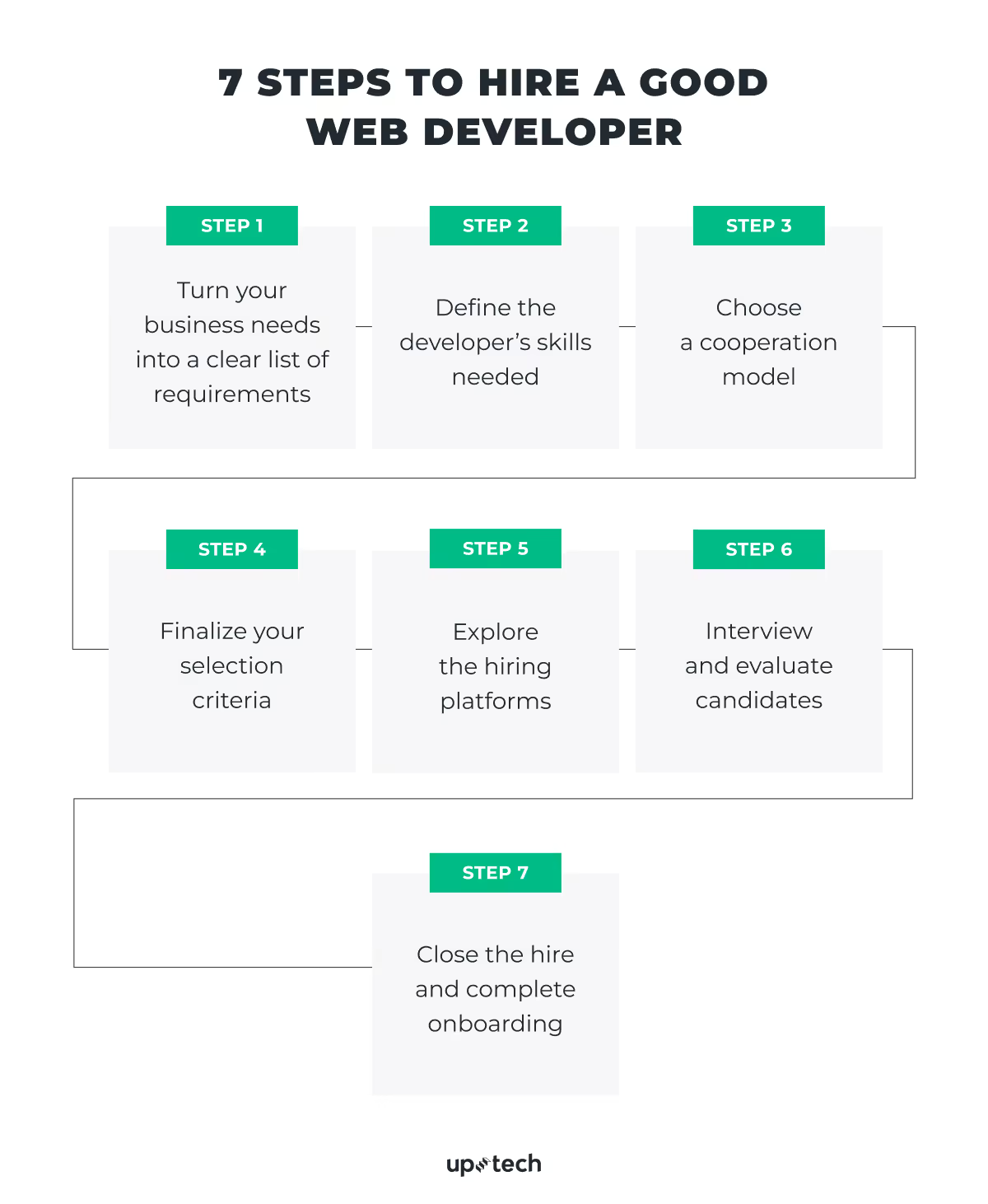
1. Turn your business needs into a clear list of requirements
Internet surfing and googling "how to hire a web developer" won’t suffice. Well-defined business needs will give you a clear understanding of which web developers will suit your project the best. However, to make a search more productive, it’s better to turn them into short practical requirements to give you an even sharper picture of the skills and experience you need.
The needs may sound like this.
I need to hire a web developer to:
- Develop high-quality code adhering to the best practices in web development.
- Focus on responsive design to ensure optimal display and functionality across various devices, including mobile platforms.
- Build user-friendly websites and interfaces using standard HTML/CSS practices.
- Integrate and manage data from back-end databases and services to enhance website functionality.
- Design and maintain efficient workflows for the development team, ensuring clear visibility of tasks and a balanced workload.
- Ensure robust security measures are in place to protect website data and user privacy.
- Continuously optimize website performance for speed and efficiency.
Take your time and make a detailed list of requirements. This helps narrow the talent pool and find the right web developer faster.
2. Define the developer’s skills needed
Okay, you have your requirements and the cooperation model picked — now it’s time to figure out what type of web developer you need for this project.
You’ve already outlined the basics while defining your product vision. This step requires more precision. Consider the technical competencies, experience level, and specializations you need
Below is a role-based breakdown to help you choose the right type of web developer.
Front-end developers
Front-end developers are responsible for the parts of the product that users interact with directly. This role is critical when the quality of the interface affects conversion, usability, or user retention.
Typical responsibilities:
- Building and maintaining user interfaces based on design files
- Implementing responsive layouts and interactive elements
- Ensuring consistent behavior across browsers and devices
Common technologies:
- HTML, CSS, JavaScript
- Frameworks such as React, Angular, or Vue
Back-end developers
Back-end developers build and maintain the systems that support the product’s core functionality. Their work determines how stable, secure, and scalable the application is.
Typical responsibilities:
- Designing APIs and server-side logic
- Managing databases and data flows
- Handling authentication, integrations, and performance
Common technologies:
- Languages such as Python, PHP, Java, Ruby, or Node.js
- Databases like PostgreSQL, MySQL, or MongoDB
Full-stack developers
Full-stack developers work across both front-end and back-end layers and are often responsible for delivering features end to end.
This role is a good fit when:
- You are building an MVP or early-stage product
- The team is small, and handoffs need to be minimal
- Speed and flexibility matter more than deep specialization
Full-stack developers typically cost more per hour than single-discipline specialists. However, for smaller projects or early development stages, hiring one full-stack developer can be more efficient than coordinating separate front-end and back-end roles.
3. Choose a cooperation model
Once you have listed your needs, you have more clarity on what to do next.
And the next thing you need to do to hire professional web developers is select the right cooperation model.
There are different options to choose from. We’ll dig deeper into each in the next block, but here’s the overview:
- Freelance: Ideal for short-term, flexible, or specialized tasks when you already have an in-house team or delivery structure in place. Hiring freelancers is the most cost-effective solution. However, since freelance web developers typically work with multiple clients, their availability and focus may be divided across projects. This can affect response time, delivery continuity, and long-term ownership.
- Outstaffing: This model involves cooperating with a company that provides dedicated developers who integrate into your in-house team while remaining employed and managed by the provider. The outstaff model offers a balance between control and flexibility, and you can scale up and down your team based on your business needs.
- In-house: Hiring a developer as a full-time employee offers the most control and integration with your team, but in-house web developers usually cost more and demand more engagement from your side.
- Outsourcing: Suitable for the entire project development when you don’t have a team at all. You can outsource web development teams that manage your project from start to finish.
4. Finalize your selection criteria
Before reviewing candidates, decide what truly drives success for your project. This prevents emotional or inconsistent decisions later in the process.
There are a few key things you should establish clearly:
- Technical capabilities
- Architecture and problem-solving approach
- Communication clarity
- Ownership and accountability
- Cultural and workflow fit
We suggest making a table and ranking these points from the most critical to the least important.
If you’re hiring through a cooperation model — freelance, outstaffing, or outsourcing — expand your criteria beyond the individual. You’ll also need to evaluate the collaboration structure and partner reliability.
For example:
- Freelance: Payment terms, availability guarantees, overlap hours, continuity risk
- Outstaffing: Ability to scale team size up or down, replacement policies, and administrative support
- Outsourcing: Delivery ownership, PM/PO involvement, reporting structure, risk management processes
At this stage, you should consolidate everything defined in the previous steps and lock in your selection criteria, so the final decision is based on a complete, structured view of your needs rather than last-minute impressions.
5. Explore the hiring platforms
Once you’ve defined your requirements and cooperation model, choose where to source candidates.
Each platform brings in different types of developers and sets expectations around ownership and availability.
Your choice affects both screening effort and time to hire.
- In-house hiring usually starts with professional networks and recruitment channels, where you can assess long-term fit and cultural alignment.
- Freelance hiring works best through global marketplaces designed for short-term or clearly scoped work.
- Outsourcing and outstaffing typically rely on vetted directories and referrals, where delivery processes and past client experience matter more than individual profiles.
Choosing the wrong platform often leads to time wasted on unsuitable candidates or misaligned expectations. The right one narrows the field before interviews even begin.
In the next section, we’ll review common hiring platforms in detail and explain when each makes sense.
6. Interview and evaluate candidates
Once you’ve sourced candidates or partners, the next step is structured interviews.
Tool familiarity alone rarely predicts delivery performance. Interviews should test how candidates approach technical problems, communicate decisions, and operate within real product teams.
Key areas to assess:
- Problem-solving and system design capability
- Ability to explain technical trade-offs and decisions
- Communication clarity with technical and non-technical stakeholders
- Ownership mindset and accountability for delivery outcomes
If you’re hiring through an outsourcing or outstaffing partner, this stage should also include team interviews, delivery process reviews, and portfolio analysis to validate delivery reliability.
7. Close the hire and complete onboarding
Selection is only the start, delivery begins with onboarding.
At this stage, finalize contract terms and prepare the developer or team to integrate into your delivery processes.
Onboarding should cover:
- Contract structure, payment terms, and engagement model
- Scope boundaries and delivery success metrics
- Access to repositories, environments, tools, and documentation
- Communication channels, meeting cadence, and reporting structure
- Security access, compliance requirements, and data policies
For outsourced or outstaffed teams, onboarding also includes aligning sprint routines, escalation paths, and responsibility ownership.
A structured onboarding phase accelerates productivity and reduces early delivery delays.
Where to Hire Web Developers: Top Websites
To hire a web development team or an individual specialist, you need to know where to look for them and have some resources where you can compare your candidates.
Here are the websites where you can find top web development talent:
1. Uptech
Uptech is a software development outsourcing and outstaffing company. We understand a lot of issues that businesses face when it comes to product development:
- How important it is to fit the deadlines
- Satisfy the investors’ needs (if you’re a startup)
- Find product/market fit
- Develop a scalable and high-quality product
Our team is here to help you pass all that successfully. We ensure that outsourcing is a process that is both effective and painless.
Best for: Long-term product development requiring strong architectural ownership, delivery accountability, and continuity, as well as end-to-end development when no in-house team is in place.

2. Clutch
Clutch is a B2B review platform where clients share their experience working with development companies.
Best for: Vendor discovery and social proof validation when considering outsourcing partners.
Uptech also has a profile on Clutch. You are welcome to check it and see our portfolio, clients’ reviews, and the list of our services.
3. Goodfirms
Goodfirms is a B2B research and review platform for top technology, software & eCommerce development service companies.
Best for: Early-stage vendor research and comparison by specialization or geography.
Here’s Uptech’s profile on Goodfirms.
4. Upwork
Upwork is a freelance marketplace with talent in various fields from all over the world.
Best for: Short-term cooperation, task-based work, prototyping.
5. Fiverr
Fiverr is one more popular freelance online marketplace with professionals from different corners of the world.
Best for: Small, isolated tasks with minimal product or architectural dependency.
6. Toptal
Toptal is a company that provides a freelancing platform, connecting businesses with software engineers, designers, finance experts, product managers, and project managers.
Best for: Hiring senior individual contributors when internal hiring capacity is limited.
3 Extra Steps For Hiring a Good Web Developer
The steps above are the foundation for the successful hiring of web developers.
But since we at Uptech specialize in delivering outsourcing, we’d like to give you some extra tips.
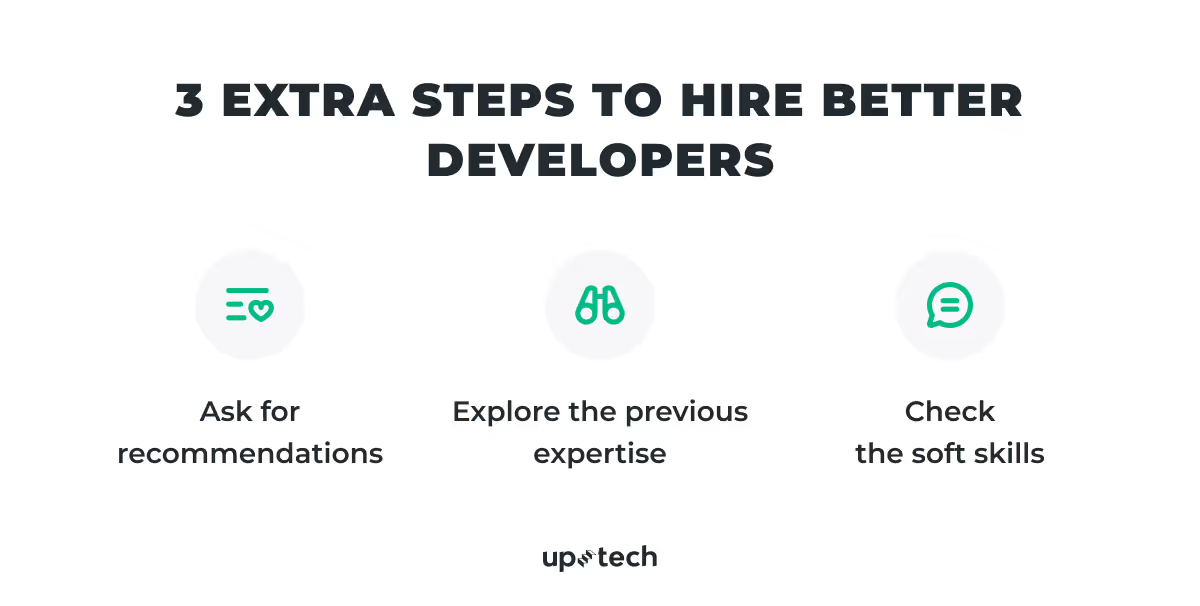
1. Ask for recommendations
In hiring or web app development outsourcing, asking for advice is very common and useful. Ask colleagues, friends, or acquaintances if they have some good web development specialists or companies in mind.
To make recommendations actionable, ask what was built, the engagement format, team size, and delivery timeline.
Ask how delivery worked in practice: milestone accuracy, scope-change handling, and communication discipline (updates, risk signaling, escalation).
Use referrals as a fast filter — confirm relevant experience, review comparable cases, and align on ownership before proceeding.
2. Explore the expertise
Review the portfolio, cases, and testimonials, and try to determine whether the developers have the experience required in your field.
For example, we at Uptech actively update our portfolio with new cases. We recently visited the Aspiration team, our client, in the USA and came back with a video testimonial from Belsien Thomas, the Senior Director of Engineering at Aspiration. Check it out.
3. Check the soft skills
Outsourcing development usually involves a long-term journey. So, isn’t it essential to share this journey with experienced, flexible, and open-minded candidates? We guess it is.
Our recommendation is to discuss the candidate’s values and goals, understand what motivates them, and assess whether there is a working fit.
When evaluating soft skills, focus on observable behavior. The developer should:
- Explain decisions clearly, ask relevant questions, and flag risks early with context and recommendations.
- Take ownership of outcomes, propose next steps, and move work forward without constant supervision.
- Handle feedback constructively, clarify changes, and adapt within the same iteration when possible.
- Demonstrate a problem-solving mindset by proposing solutions and trade-offs (scope, time, quality) and explaining their impact on delivery.
- Maintain a compatible working rhythm by aligning on availability, response time, async communication, and update cadence from the start.
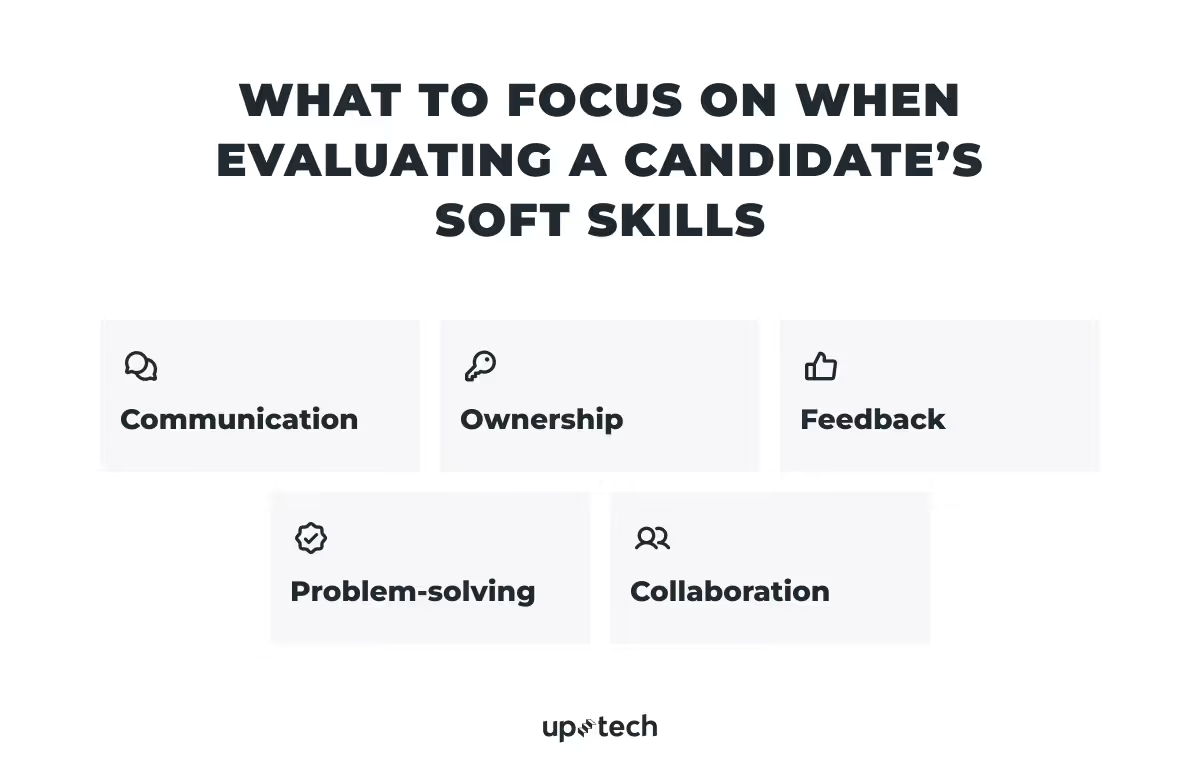
Strong soft skills reduce rework, prevent surprises, and keep delivery predictable.
4 Employment Models for Hiring Web Developers
The specifics of your project will define the way you will collaborate with a hired professional or development team. Explore these pros and cons to choose the model that suits your project best.
Hiring a web developer in-house
The first option that comes to mind in assembling a team of developers is hiring in-house. This means employing a professional who will be fully committed to your project with no by-side duties. When you hire a person in-house, you take responsibility for the working environment, equipment, insurance, personal benefits, etc.
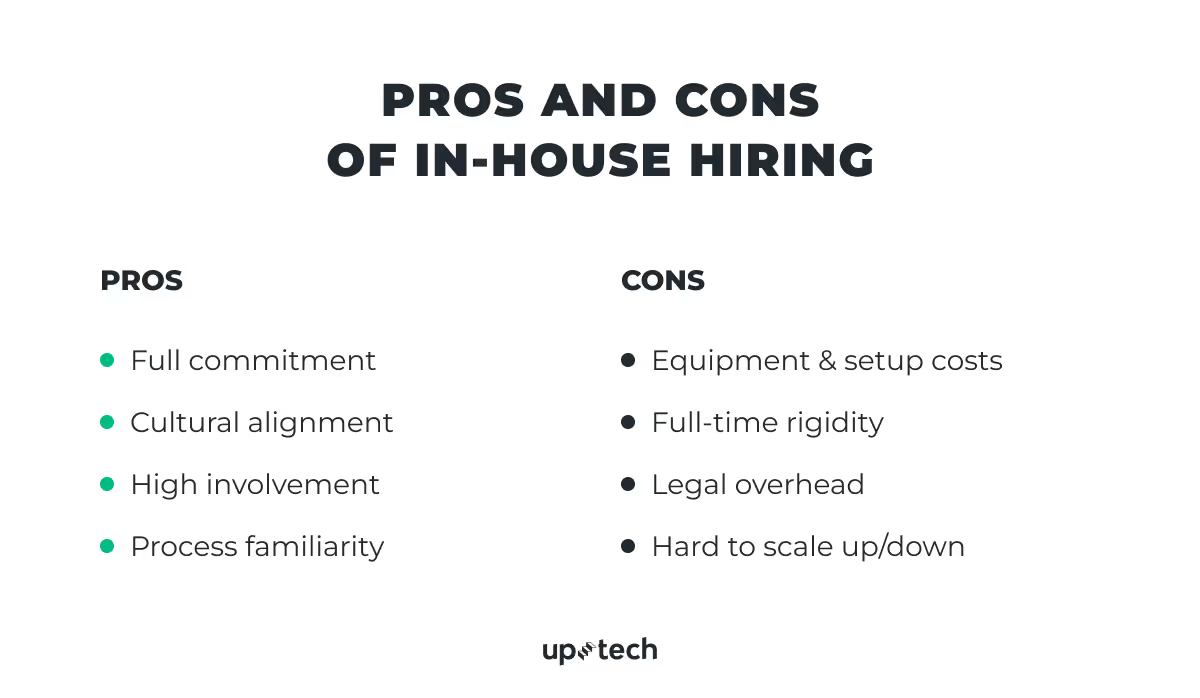
Pros of in-house hiring
- Total commitment of the employee
- The employee is ingrained in the company’s culture
- In-house employment leads to more input and involvement
- The in-house developer will be more aware of the development processes in the company
Cons of in-house hiring
- Responsibility of providing suitable working conditions and equipment
- Only a full-time employment option
- Legal and employment compliance obligations
- Lack of scalability — each hire requires time and vetting, and you can’t easily let someone go after a few months if project direction changes
Hiring a freelance web developer
Cooperation on a freelance-basis has been a widely-used option for company owners. Sometimes you cannot ensure full-time employment for a person you hire, so opting for freelancers can suit you better.
Pros of hiring freelancers
- No need to provide working equipment
- The scope of employment is optional
- No long-term obligations
Cons of hiring freelancers
- A freelance worker can be involved in other projects, which means less commitment
- Complicated onboarding process
- Difficult upscaling — each new hire requires a separate search and vetting process.

Hiring web developers through outstaffing
Outstaffing model involves hiring remote web developers who are officially employed by another company. This model provides you with dedicated IT professionals who work exclusively on your projects. The administrative and HR responsibilities remain with the outstaffing provider.
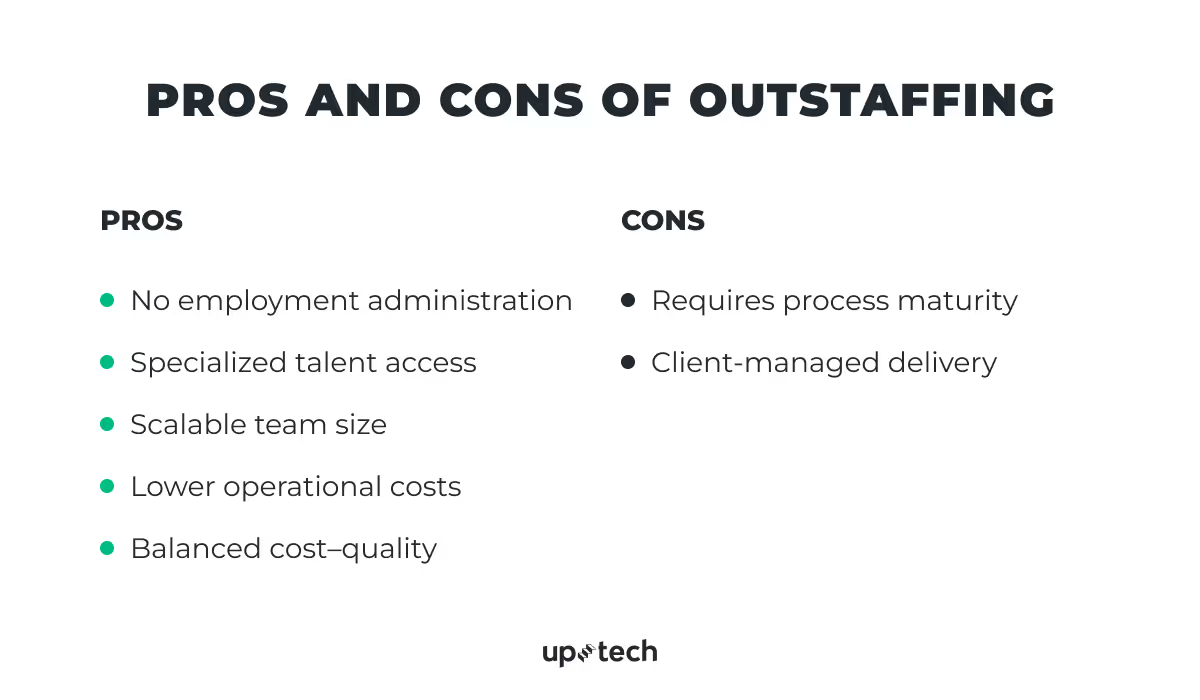
Pros of outstaffing
- No need to manage HR tasks such as payroll and benefits
- Access to a pool of professionals with specialized experience
- Flexibility to adjust team size according to project requirements
- Reduced costs related to hiring, onboarding, and termination processes
- Optimal balance of cost and quality, with a focus on long-term collaboration
Cons of outstaffing
- Process maturity dependency
- Requires internal management of development and delivery processes.
Uptech offers IT staff augmentation services. Check it out if you want to scale up and down your web development team fast and according to your needs.
Outsourcing web development
The most popular option among business owners these days is hiring a web development team with the outsourcing collaboration model. Outsourcing web developers is a contract-based collaboration mode, where an outsourcing company provides the IT-reliant business processes, application services, and infrastructure solutions.
This model has become more relevant in recent years as remote work and distributed teams have become the norm. In 2026, global IT spending is forecast to exceed $6 trillion, reflecting continued investment in services, software, and digital transformation — including outsourced development and support.

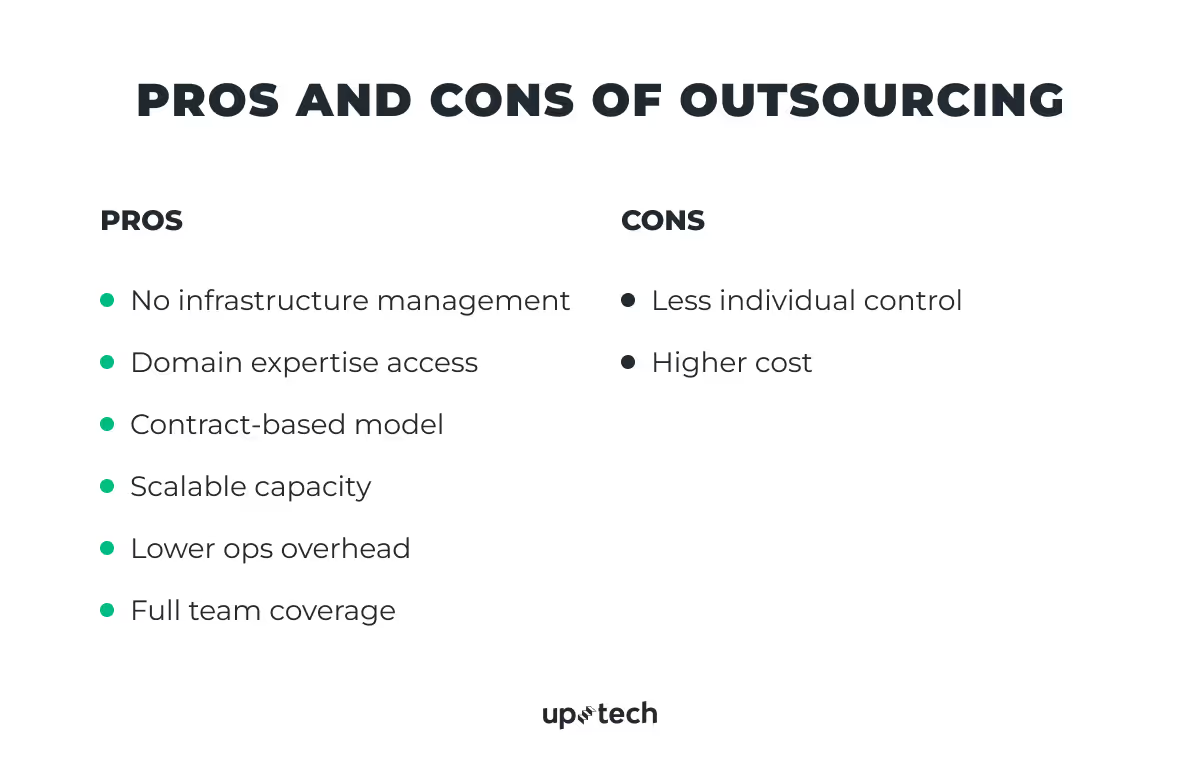
Pros of outsourcing
- No responsibility for the working equipment and documentation
- You may choose the company with the particular industry expertise
- Contract-based collaboration
- The team is adjusted to the workload and monthly budget
- Reduced hiring, onboarding, firing expenses
- Replaces several hires — covers full team capacity, not just one developer
Cons of outsourcing
- Less control over each team member
- Usually the most expensive external hiring option
Check out 10 Outsourcing Problems: Why Do They Arise And How To Solve Them?
How Much Does It Cost To Hire a Web Developer?
The cost of hiring a web developer can vary widely depending on the cooperation model you choose, the seniority level of a professional, and some other factors.
But we know that you are here to hear the exact numbers of web programmers for hire. We’ll give them to you, but let’s list the factors first, as they will help you understand where and how you can reduce costs.
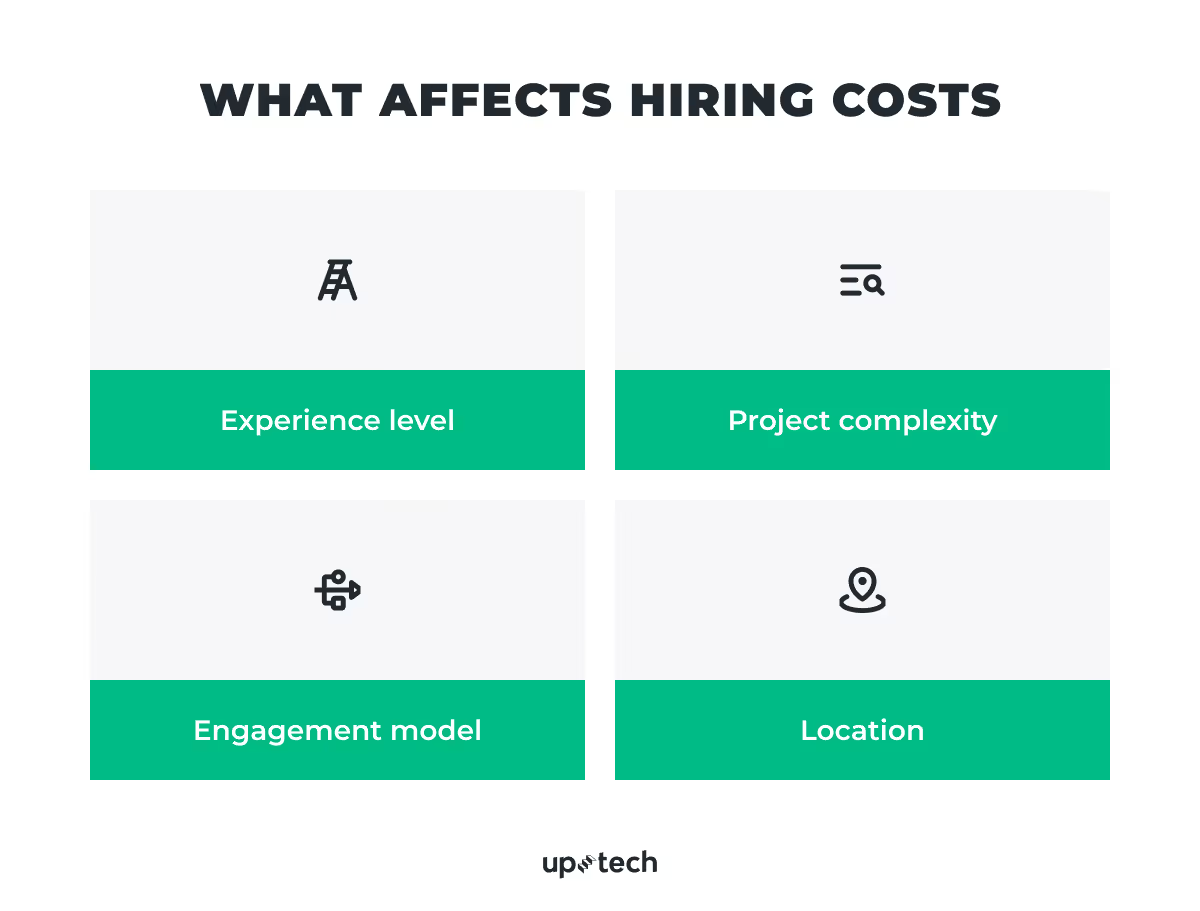
Factors influencing web developer hiring costs
Experience level
It’s obvious, but let’s highlight it one more time. The expertise and seniority of the developer impact the cost. Junior developers are more affordable, while senior developers with specialized skills command higher rates.
Project complexity
The nature and complexity of your project can influence the cost. Simple website projects cost less, whereas complex web applications with advanced features are more expensive.
Engagement model
Whether you choose freelancers, in-house teams, or outsourcing companies affects the overall cost. As we mentioned above, hiring a freelancer is cheaper than hiring an outsourced team. However, outsourcing or outstaffing will cost you less than in-house hiring.
The rates below reflect blended global averages across major hiring regions — including North America, Western Europe, Eastern Europe, Asia, and LATAM.
Location
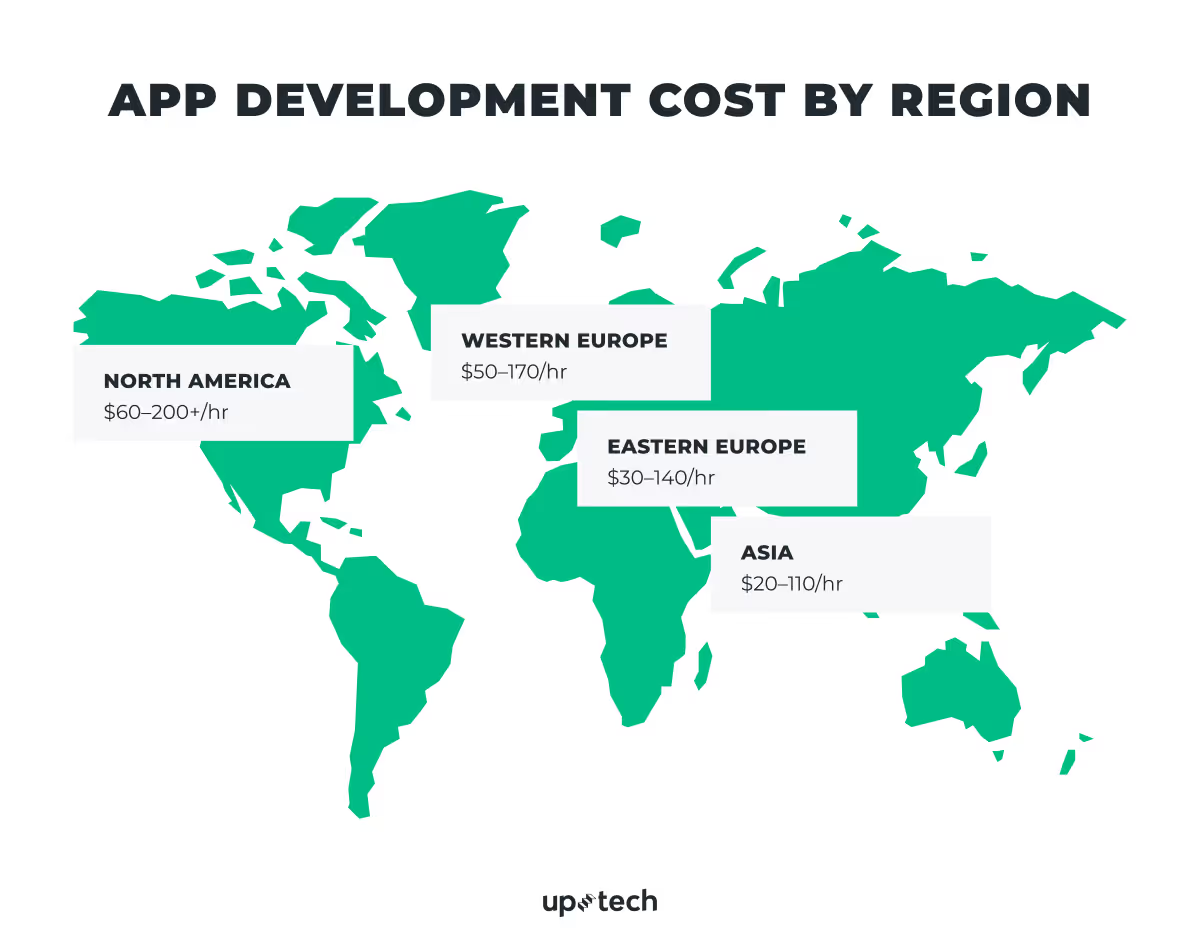
The geographical location of the developer or the outsourcing company plays a significant role in determining the cost. Developers in North America and Western Europe typically charge higher rates compared to those in Eastern Europe or Asia.
Average cost by region and experience
Learn more about the web app development cost in our article.
Additional considerations
Outstaffing vs. outsourcing
The main difference is who owns delivery. With outstaffing, you manage priorities, task assignment, and day-to-day delivery, while the partner company handles HR and administration. This works well for long-term or evolving products because it reduces handoffs and keeps knowledge inside your team.
With outsourcing, you delegate a defined scope to a vendor that owns execution end-to-end, including project management, staffing, QA, delivery reporting, and risk management. It fits best when the scope and acceptance criteria can be clearly defined upfront.
Hidden costs
Hourly rates are only part of the budget. Common “missed” costs include ramp-up and knowledge transfer time, meetings and overlap hours across time zones, tool and license access, cloud infrastructure, security/compliance work, and post-launch support. If these aren’t planned, you’ll see budget drift, delivery delays, and unexpected add-ons.
Quality vs. cost trade-offs
A lower rate can increase total cost when the team lacks delivery maturity (planning discipline, code reviews, QA, documentation, and early risk signaling). That usually shows up as rework, more bugs, and slower releases. A higher upfront rate often buys predictability: fewer defects, faster iterations, and less long-term cleanup — especially for business-critical or regulated systems.
Why Hiring Web Developers Through an Outsourced Team Is the Best Option
Companies turn to IT outsourcing for clear, practical reasons. According to Deloitte’s research, 65% of organizations use outsourcing to stay focused on core business functions, while 63% cite cost efficiency as a key benefit. Together, these drivers explain why outsourcing has become a long-term strategy rather than a short-term fix.
With over 10 years of experience working with startups and established businesses, we see these motivations reflected in real projects every day. When clients choose Uptech, they usually point to three things:
- Access to a broad pool of experienced engineers, without long hiring cycles
- Practical guidance and technical input, not just execution
- The ability to scale capacity quickly as product needs change
This combination allows teams to move faster, stay focused, and keep delivery predictable.
In another case, when you already have a product but need an extra hand of help or an external point of view, we also have something to offer. With our tech expertise in web development, fresh ideas, and a dedicated team, the app development process becomes faster and smoother.
How to Hire Web Developers: 3 Outsourcing Models to Choose From
Hiring developers for startups and established businesses is a common practice. Because of the great demand, there are different options for outsourcing web developers that suit different products. You can adapt outsourcing cooperation to your needs and choose a collaboration model that suits your project best.
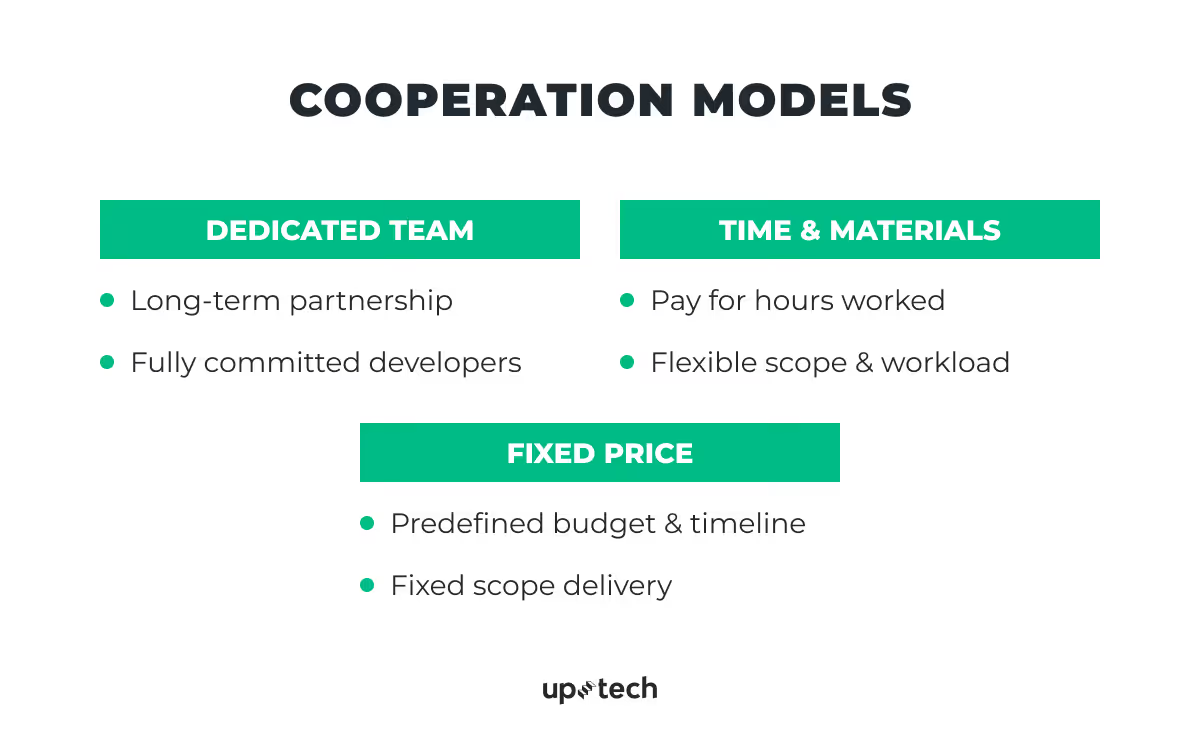
Here are three of the most popular options:
1. Dedicated team
A dedicated team is a model where a client and a developer collaborate on a long-term basis. This model implies that you hire dedicated web developers who are fully committed and guarantee that a developer will not take on projects from other clients.
2. Time & materials
The time and material formula is where a customer pays for the hours spent on product development and the completed amount of work.
3. Fixed-price model
In this model, the budget and timeline are predefined before the project starts. The client pays the amount agreed in the contract, regardless of any blockers that occur during the project.
Hiring a Web App Developer Process at Uptech
With over 10 years of experience in IT outsourcing, we help businesses turn product ideas into scalable, market-ready solutions. Our team has supported Fortune 500 and Inc. 5000 companies, as well as fast-growing technology startups, in building products that achieve real product-market fit.
We focus on business outcomes, not just delivery. A customer-centric approach and deep industry expertise allow us to build long-term partnerships that support sustainable growth.
Among our clients are:
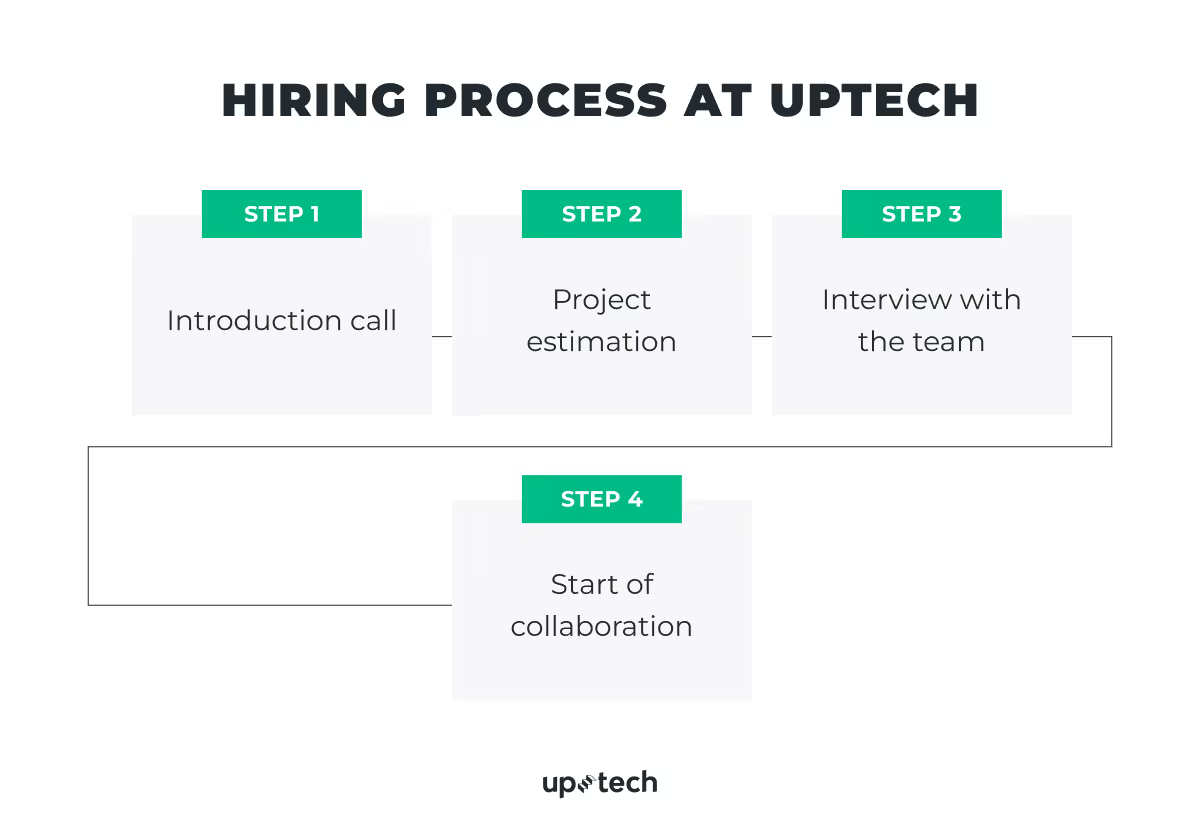
To help our clients make the right choice, we take the following steps during the hiring process:
Introduction call
Once a potential client has requested to work with us, we hold an introductory meeting to discuss goals, timelines, and budget. We make an intro call to know more about the client and determine if we are a fit.
Project estimation
Following the introduction, we make a general evaluation of the project and tasks included to discuss the team involvement.

Interview with the team
Once the tasks are defined, we gather a team of developers who have the proper expertise and set up an interview with the client.
Start of collaboration
Finally, we hold a kick-off call to set the start date and make a contract.
We focus on business value, user needs, not only on sophisticated code. We suggest improvements and alternatives, make changes, and evolve continuously. Uptech developers suggest how to reduce the scope, cut the cost, and choose a more suitable tool.
With our experienced team, you can scale up to meet your growth. Contact us if you have a project to collaborate on.
Conclusion
Hiring the right web developer is less about a perfect resume and more about fit: what you need shipped, what constraints matter, and how much ownership the role requires.
Start by defining success. Then choose a cooperation model that matches your stage, and assess candidates on observable behavior — clear communication, real ownership, and early risk signaling — not just tool familiarity.
This approach prevents the most expensive hiring mistakes: choosing the wrong seniority level, hiring without clear scope, or picking a collaboration model that doesn’t match how your team works. The result is faster alignment, fewer restarts, and more predictable delivery.
And if internal hiring is too slow or you need a ready delivery setup, an experienced outsourcing partner can be a practical way to move forward — without losing control over priorities and quality.
Need an outsourcing team?
Get in touch to discuss your project and delivery requirements.

FAQs
How to evaluate the quality of a web developer?
Look at their skill set, seniority level, and portfolio for the quality of projects. Check their knowledge of coding languages and tech stack relevant to your project. Interview to check their soft skills, and assess their problem-solving skills and understanding of web standards. Also, consider client testimonials and their ability to communicate effectively.
How to find and hire an experienced website developer?
Here are 5 steps to follow when you look for a web developer to hire:
- Outline your business needs
- Choose a cooperation model: freelance, in-house, outsource, or outstaff
- Define the developers’ skill set
- List your selection criteria
- Discover the hiring platforms
What is the difference between a web designer and a web developer?
A web developer builds and maintains the core structure of a website using coding languages like HTML, CSS, and JavaScript. A web designer is responsible for the visual aspects and user experience of a website, using tools like Adobe Photoshop and Sketch. They create the layout, color scheme, and graphic elements.
What are the benefits of hiring a web development company?
Hiring a web development company offers the best price and quality ratio. It lets you scale up and scale down the development team based on the project’s needs. You can choose the company with the proper web development experience and reduce hiring, onboarding, and firing expenses. Web development companies also provide ongoing support and maintenance, and can handle larger, more complex projects efficiently.