Money transfers, savings, investments, and bill payments have moved online, from standing in line at a bank branch to completing transactions in seconds, often with biometric authentication.
Thanks to many fintech apps at hand nowadays, the need to visit physical bank branches has significantly decreased. If you’re building or scaling a fintech product, you already see how much attention the market attracts from startups, investors, and, unfortunately, cybercriminals as well. Fintech products operate with complex data flows, third-party integrations, and constant user interactions that increase exposure points. Still, the standards and requirements have barely altered, one of which is fintech security.
The risks are not theoretical. In 2024, PayPal agreed to pay a $2 million civil fine after cybersecurity failures exposed customers’ Social Security numbers. According to Kroll’s 2024 report, the financial sector accounted for 27% of all breaches handled in 2023, up from 19% the year before. In other words, one in four major breach investigations involved finance.
As a Solution Architect, I have faced the main security threats for fintech products. And today, I'll share with you the list of the best fintech app security solutions on these new cyber grounds and give you a detailed fintech security checklist.
Fintech Security Glossary
Before we start, let's ensure that we're on the same page with some of the fintech security terms you will come across in this article.
A cyber attack/ cybersecurity attack is an attempt to gain access to a system, software, or computer network to disable, disrupt, destroy, or control the systems or steal the data held within these systems.
A data breach/ data leak is a situation in which data held by some party is accessed, viewed, or potentially stolen by unauthorized third parties.
For example, a hacker accessing a database copies users' data, such as email addresses, passwords, etc.
Fintech security practices are a set of information security standards used by fintech organizations worldwide to establish protected data management systems. It contains policies, frameworks, and development activities that help fintech organizations protect different types of data from cyber attacks.
Zero-trust architecture is a simple idea: trust nothing by default. Every user, device, and request must prove its legitimacy before getting access, even inside your own system.
Multi-factor authentication is an extra layer of login. Instead of relying only on a password, it asks for another proof, such as a one-time code, fingerprint, or hardware token.
API Security is an approach to protecting the channels through which systems exchange data. It defines who can access each endpoint, limits excessive requests, encrypts communication, and tracks unusual patterns that may signal abuse.
Know Your Customer (KYC) is aset of standards that require financial companies to confirm who their customers are before granting access to services. Identity documents, verification checks, and risk assessment help prevent financial crime.
Know Your Business (KYB) is a set of standards that applies similar verification principles to companies. It confirms that a business client exists legally and operates under valid registration.
A fraud detection system is a technology solution that looks for patterns that fall outside normal behavior and can block or flag transactions before money leaves the system.
Tokenization is a process of converting sensitive data into a reference value that has no standalone meaning. The original information stays protected in a secure environment, which limits exposure even if a system component is compromised.
DevSecOps, which stands for development, security, and operations, is a framework that reviews risks right before launch, and security checks happen throughout development. Product, engineering, and security work side by side from the first sprint to production.
Strong customer authentication (SCA) is a regulatory requirement under PSD2 in Europe. For online payments, companies must verify identity with two independent factors instead of just a password. That usually means the combination of something the user knows with something they have or something they are, such as a device confirmation or biometric check.
Secure SDLC is a framework used to move security to the earlier stages within the process. Teams consider risks at the design stage, review code along the way, and address issues before each release rather than after deployment.
Fintech Security: Why Does It Matter?
Banking has always attracted fraudsters, regardless of whether the financial operation is being carried out in a bank or online. Important information can also be exposed to simple human blunders or complications of a technical kind.
Regardless of the reason for the data leak, it can destroy your business's reputation in the blink of an eye. It leads to irreparable financial damage, loss of intellectual property, etc. Below, I gathered the key cybersecurity statistics, not to scare you but to show how important it is to remain alert and protect your software at all times.
Fintech incidents are no longer rare edge cases. They happen across regions and business models.
In early 2025, crypto exchange Bybit lost roughly 401,000 ETH, worth about $1.4 billion at the time. The breach was linked to a compromise inside its wallet infrastructure. Withdrawals were paused while the company rebuilt parts of the system. Even large, well-funded platforms remain exposed when internal controls fail.
In the UK, reports in late 2024 pointed to a potential leak involving Finastra, with up to 400 GB of banking client data mentioned in early disclosures. Situations like this highlight how third-party providers can become weak links in financial ecosystems.
The financial impact continues to rise. In the United States alone, the average cost of a data breach has reached $10.22 million as of 2025.
Fintech risk is global. The US has seen incidents involving Coinbase, PayPal, Lemonade, Root, and Cash App. Europe faces both security incidents and regulatory consequences under GDPR. Asia-Pacific remains a frequent target for crypto-related attacks, including operations linked to North Korean groups that accounted for hundreds of millions in stolen assets over the past two years. Emerging markets such as Brazil and India have also experienced large-scale data leaks affecting millions of users.
Digital finance attracts capital and users. It also attracts attackers. Geography does not offer protection.
📌Thinking of developing a new bank that uses top-notch technologies and offer digital-only banking services? Read our article on how to build a neobank to leverage our expertise.
What Will Happen If You Ignore Fintech Security? 4 Main Risks
After all, whether it isa blackout, ransomware, or internal mistake, your company remains responsible for protecting your customers’ data if it gets lost or damaged. And speaking of finances, fintech software development has many challenges, including the vulnerability of the information it processes. So let’s take a look at some of the possible risks.
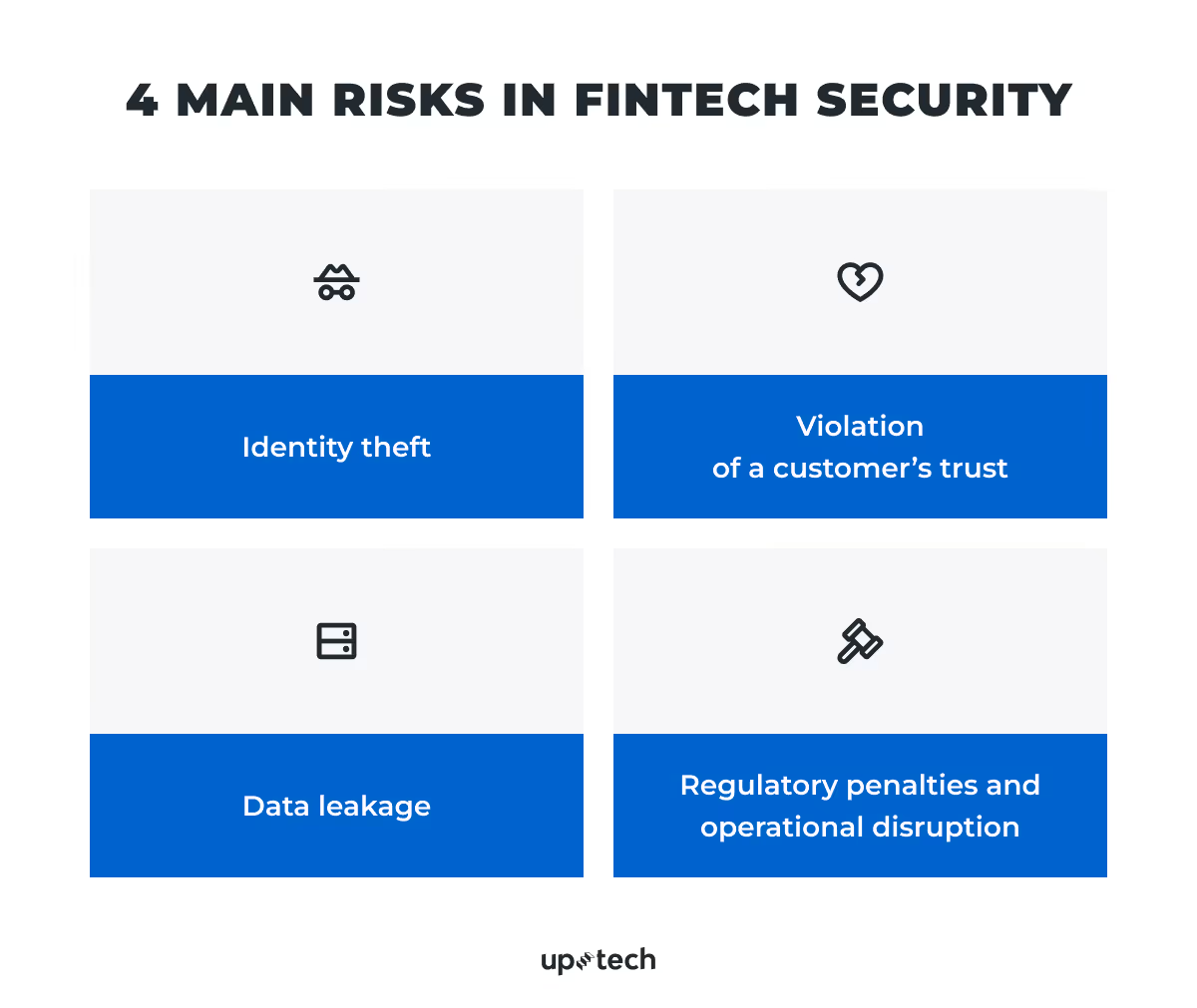
Identity theft
This issue occurs when someone steals personal or financial data and thus obtains access to what you, your colleague, or client is authorized to, for instance, the bank account credentials.
Considering the risk that anyone can be a target for identity theft, it’s difficult not to notice how crucial the distribution of access and certain functions within a business network are between the workers.
Identity theft is also likely to cause a chain of further difficulties, such as phishing or spoofing, which may lead to huge data and financial losses.
Today, identity theft often appears in the form of account takeover attacks. These may involve credential stuffing, SIM swap fraud, phishing campaigns, or even deepfake-based identity bypass. Once attackers gain access to an account, they can transfer funds, apply for loans, or lock users out of their own profiles.
Violation of a customer’s trust
Good news doesn't have a tendency to spread as fast as bad news. If your customers are satisfied with your fintech app, they will definitely keep using your product. Moreover, they are likely to recommend it to their friends. But imagine the situation when a customer’s data gets broken, though: not only will you lose the trust of your actual client, but also of other potential users.
In fintech, trust loss can also escalate beyond individual users. App stores may suspend applications that fail to meet security standards. Payment providers can terminate agreements. Banking partners may reconsider cooperation if risk controls appear insufficient.
Even though implementing fintech security consumes time and money, winning the trust back takes far more effort.
Data leakage
I’ve mentioned the case when the information gets stolen or lost. Well, it can also be misused if a fraudster manages to read the data. And a hacker doesn’t need to make much effort to read and use the stolen information if it is plaintext or secured in a bad way. All in all, it leads to, again, the violation of customers’ trust, reputational issues, and profit losses.
These are the three main security risks I often highlight for clients. The bad news is that any system can be hacked anyway, but the good news is that the scale of losses, such as time and money needed to recover, depends on the level of your fintech security.
Data exposure does not always result from a dramatic breach. It can happen due to API misconfiguration, unsecured cloud storage, overly broad internal access rights, or weak third-party integrations. Insider threats also remain a risk when access is not properly segmented.
Regulatory penalties and operational disruption
Fintech companies answer to regulators, whether they like it or not. When security controls break down, it rarely ends with just a technical fix. Authorities may step in, request documentation, review internal processes, and require formal remediation. That takes time and pulls focus away from product growth.
The financial penalty is often what gets attention. But the real pressure comes from everything around it. Extra reporting requirements. Follow-up audits. Delayed approvals for new features. Tougher conversations with banking partners and investors who start asking how strong your controls actually are.
Operational disruption adds another layer. If transactions stop or withdrawals freeze, users react immediately. Support teams get flooded. Revenue drops the same day. Even after systems are restored, trust does not fully reset.
Let’s get back to the PayPal example I mentioned in the intro to this article. After cybersecurity weaknesses led to the exposure of Social Security numbers, the company agreed to pay a $2 million civil fine. The fine was visible. The internal work that followed was not. Incidents like this require months of system review, policy updates, and closer regulatory attention.
These risks are real, but they are not uncontrollable. With the right security approach, you can significantly reduce exposure and limit the impact of potential incidents. Below are the fintech security practices that help build a more resilient product.
Check out how we ensured 99% crash-free sessions on the Aspiration project.
💡Starting a venture in fintech? Check out our article on how to avoid 5 common fintech mistakes and increase your odds of success.
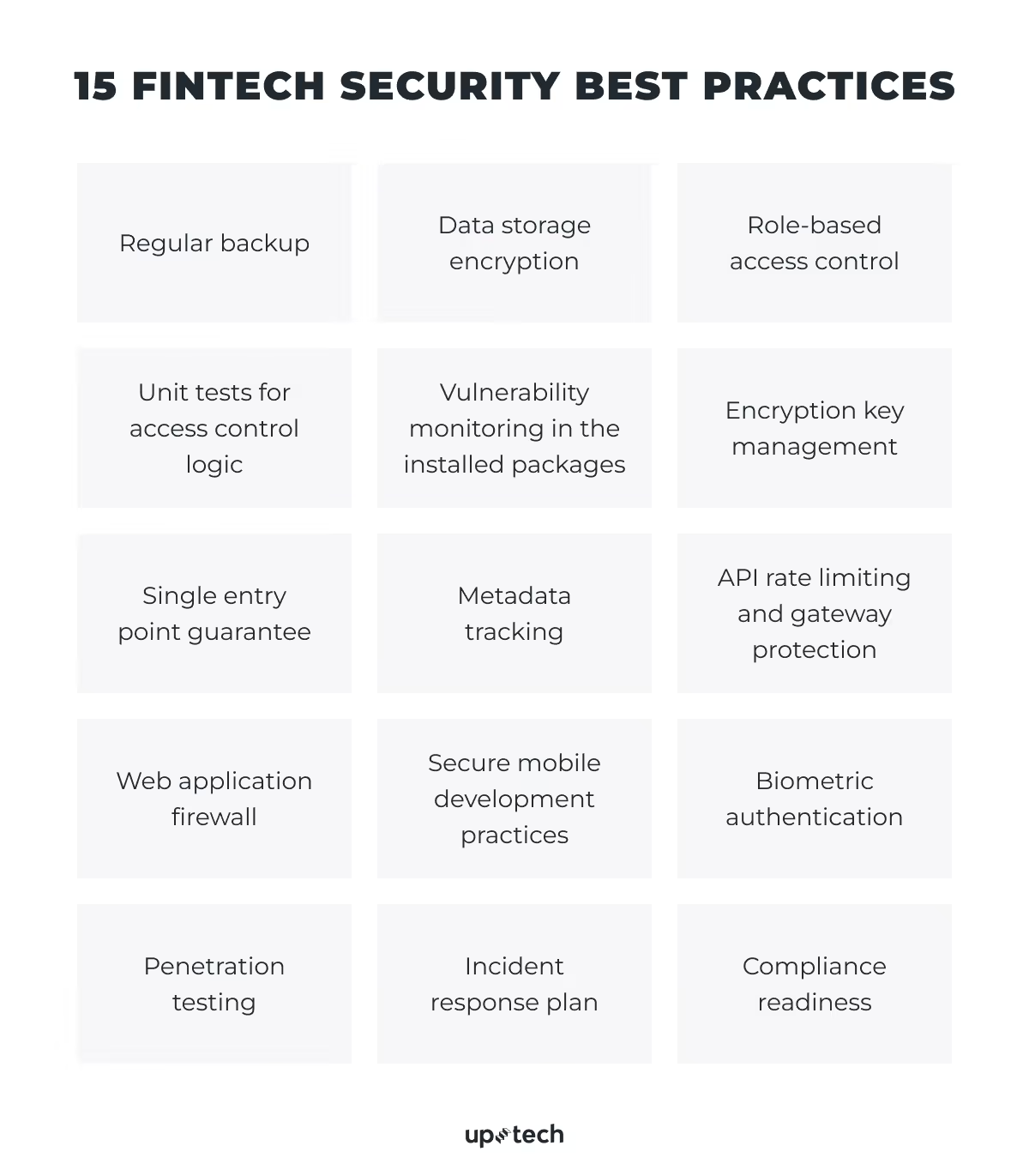
15 Fintech Security Best Practices
Below, I gathered security best practices for fintech application development and listed them regarding their importance level. So let’s start with the critical ones.
Regular backup
Data loss isn’t always a threat from the outside, but it can also be the result of human error or hardware failure. Creating a copy of crucial data prevents it from getting lost completely. To save as much edited data as possible, ensure that important files are backed up regularly, saving edited and changed information.
Expert tip: Configure backups and test recovery procedures at least once per 6 months.
In fintech projects, it is also important to use immutable backups that cannot be altered after creation. Define recovery time objectives and recovery point objectives in advance so the team knows how quickly systems must be restored and how much data loss is acceptable. Geo-redundant storage adds another layer of protection in case of regional outages.
Data storage encryption
Data encryption is an essential security practice that prevents unauthorized eyes from reading your data. When we encrypt data, we protect it from unauthorized external access on storage devices.
It is important to encrypt data both at rest and in transit. Modern standards such as TLS 1.3 help secure communication between services and user devices. Encryption should apply not only to databases but also to backups and internal service communication.
Role-based access control
It is a common security practice to assign permissions to your colleagues based on the position they hold within a company. A certain degree of access to different data and features doesn’t imply your mistrust but improves work efficiency due to reduced administrative workload.
Expert tip: Create admin, read-only, and developer roles and control permissions given to the roles.
Access control should follow the principle of least privilege. Each employee and system component should only have access required for their role. In more mature setups, this aligns with a zero-trust model where access is continuously verified rather than assumed.
Unit tests for access control logic
Security unit tests for access control are one of the critical fintech security practices. Performing unit tests is a must for us in every fintech project. We do it to check if a user sees the right screen, an admin sees the right screen, and so on. It's super sensitive information, and you have no place for mistakes here.
Access control testing should be part of a broader secure development lifecycle. In addition to unit tests, code reviews, and automated security testing tools, such as static and dynamic analysis, help identify vulnerabilities before release.
Vulnerability monitoring in the installed packages
Fintech apps often use third-party software providers. This software sometimes has its own vulnerabilities and weaknesses that cybercriminals can use to hack into, which makes it riddled with security flaws. Hackers can implement an attack known as a supply chain attack in which they compromise a third party to get access to the data.
I suggest checking the third-party providers before using them and regularly monitoring them during implementation. It will help you spot the vulnerabilities in your project, reveal what areas it can affect, and what you need to fix.
Automated dependency scanning tools can detect known vulnerabilities in open source libraries. Maintaining a software bill of materials helps track third-party components and respond quickly when new security advisories appear.
Encryption key management
We use AWS KMS for encrypting sensitive credentials and rotating the encryption keys. We can also search for alternative ways to match your specific product needs and business requirements, but Amazon Security Lake covers all the main needs.
Why is key management so important? Without getting too technical, all that needs to be done is to keep users’ data secure and confidential.
Key rotation policies and separation of duties reduce the risk of internal misuse. While AWS KMS is one option, the key principle is centralized control and restricted access to encryption material regardless of the provider.
Single entry point guarantee
Just like in physical banks, make sure you have one single “passage” for accessing the internal resources, which is controlled and monitored at ease. If you detect unauthorized entry, you close the entry to prevent fraud from reaching the files.
Expert tip: If you need access to the internal resources, database, etc., make sure you have a controlled entry point (aka VPN) that can be monitored.
Metadata tracking
Gathering IP and device ID for users who access the login is a simple action you can do to detect unwanted access. The data you can track depends greatly on your fintech app category (e.g., payment, loan, money transfer, banking). You're not free to track all data, and should be very accurate here to avoid gathering sensitive information about users.
This type of monitoring can evolve into behavioral anomaly detection. By analyzing login patterns, device changes, and transaction behavior, fintech systems can identify suspicious activity early and trigger additional verification steps.
API rate limiting and gateway protection
Public APIs should limit excessive requests to prevent abuse, scraping, and automated attacks. Without proper rate limits, attackers can test credentials at scale or overload endpoints.
An API gateway adds another layer of control. It centralizes authentication, traffic filtering, and monitoring, which makes it easier to detect anomalies and enforce consistent security policies across services.
Web application firewall
A web application firewall filters malicious traffic before it reaches your application servers. It helps block common threats such as SQL injection, cross-site scripting, and automated bot traffic.
While it does not replace secure coding practices, it reduces exposure by stopping known attack patterns at the perimeter.
Secure mobile development practices
Mobile fintech apps require additional protection beyond backend security. Sensitive data should not remain stored in plaintext on the device, and communication with backend services must be encrypted.
It is also important to protect the app against reverse engineering and tampering. Mobile apps often become direct targets because attackers see them as entry points into financial systems.
For more information, read our article containing best practices for mobile app security.
Biometric authentication
Biometric login methods, such as fingerprint or facial recognition, provide an additional authentication layer. When implemented correctly, they reduce reliance on passwords alone.
However, biometrics should complement other controls rather than replace them. Device-level protection and secure session management remain essential.
📲 We offer full-cycle financial software development services, from creating product development strategy to top-notch fintech services implementation. Check them out to build a 100% secure fintech app fast and at reasonable price with Uptech.
Penetration testing
Regular penetration testing exposes weaknesses that automated scanners may miss. External security specialists simulate real attack scenarios to evaluate how the system responds.
Independent testing provides an objective view of your security posture and often reveals configuration or logic flaws that internal teams overlook.
Incident response plan
Every fintech product should maintain a documented incident response plan. It defines who takes responsibility, how communication flows internally, and how users and regulators are notified if necessary.
Clear procedures reduce chaos during high-pressure situations and shorten recovery time.
Compliance readiness
Preparing for frameworks such as SOC 2 or ISO 27001 strengthens internal processes and documentation. It also makes conversations with banking partners and enterprise clients smoother.
Compliance readiness signals maturity and operational discipline, which matter in fintech partnerships.
Here is the full fintech security checklist with 15 security best practices.

Fintech’s Main Regulations and Policies
Some fintech products, such as neobanks, operate in partnership with licensed banks. In such cases, the partner bank carries the primary regulatory responsibility. However, fintech companies are still expected to meet strict security, compliance, and reporting standards.
Below are the key regulations and frameworks that most fintech businesses should be aware of, grouped by region.
United States regulations and requirements
Bank Secrecy Act (BSA): Also known as the Currency and Foreign Transactions Reporting Act. This law requires financial institutions to help detect and prevent money laundering along with U.S. government agencies.
Anti-Money Laundering Act (AMLA): This act requires the Treasury Department to set forth policies and regulations that protect against money laundering and terrorist financing. It compels organizations to develop and adhere to risk-based AML compliance programs.
Electronic Fund Transfer Act (EFTA): Enacted in 1978, this act establishes the rights and liabilities of consumers when it comes to funds transferred electronically, which includes monitoring the use of ATMs, debit cards, and automatic withdrawals from bank accounts.
Electronic Signatures in Global and National Commerce Act (ESIGN): Enacted in 2000, this law regulates the use of electronic signatures and records, as well as lays out the guidelines for interstate commerce.
Red Flag Rule: Established by the FTC and the NCUA, it works to prevent identity theft in the financial industry, and also improves consumer access to credit information, the accuracy of consumer reporting, and financial education and literacy.
Fair Credit Reporting Act (FCRA): Passed in 1970, it ensures consumer information is accurate, fair, and private, protecting consumers from the inclusion of information on their credit report that could affect their credit unjustly.
National Automated Clearing House Association (Nacha): Responsible for managing the ACH Network, which serves as a network for consumer, business, and government payments. It is an essential component of the electronic movement of money and data in the U.S.
European Union and the United Kingdom regulations
PSD2 (Payment Services Directive 2): Regulates electronic payments in the European Union and sets security requirements for payment providers. It introduced Strong Customer Authentication, which requires at least two independent identity factors for online transactions. PSD2 also enabled open banking, which increases both integration opportunities and security responsibilities.
GDPR (General Data Protection Regulation): Governs how companies collect, process, store, and transfer personal data within the EU. It requires lawful processing grounds, clear consent mechanisms, strict breach notification timelines, and strong safeguards for user rights. Penalties can reach up to 4 percent of annual global turnover.
eIDAS Regulation: Defines standards for electronic identification and trust services across the EU. It ensures that electronic signatures and digital contracts hold legal validity, which is particularly relevant for remote onboarding and digital agreements.
DORA (Digital Operational Resilience Act): Establishes ICT risk management and operational resilience requirements for financial institutions in the EU. It places strong focus on incident reporting, third-party risk oversight, and system reliability.
UK GDPR and FCA requirements: UK fintech companies follow UK GDPR for data protection and comply with Financial Conduct Authority standards. The FCA emphasizes operational resilience, consumer protection, and governance. Security failures may result in fines or restrictions on regulated activities.
Global standards and industry frameworks
PCI DSS (Payment Card Industry Data Security Standard): Applies to companies that process, store, or transmit payment card data. It defines technical and operational requirements for securing cardholder information, including network security, access control, monitoring, and vulnerability management. Non-compliance can lead to fines, higher transaction fees, or loss of the ability to process card payments.
ISO 27001: Establishes requirements for building and maintaining an information security management system. It focuses on risk assessment, internal controls, documentation, and continuous improvement of security processes. Certification signals that a company follows structured and audited security practices.
Uptech holds ISO 27001 certification and continues to strengthen internal security processes to remain a reliable software development partner for fintech teams.
SOC 2: Assesses how organizations manage customer data based on criteria such as security, availability, confidentiality, processing integrity, and privacy. It is commonly required by enterprise clients and banking partners as part of vendor due diligence and risk assessment.
How to Approach Fintech Security from Day One
If you are building a fintech product, security should not be added after the MVP development. It needs to be part of the initial technical decisions.
Based on my experience, I suggest the following steps as a practical way to approach it.
Step 1. Define your data risk level
First things first, identify what kind of data your product will handle. Payment information, identity documents, financial records, and investment data. The more sensitive the data, the stricter your security model needs to be. Many teams underestimate this at the beginning and pay for it later with architectural changes.
Step 2. Design access control early
Decide who can access what before the system grows. Define internal roles, service-to-service permissions, and authentication logic. Apply the least privilege principle from the start. Fixing over-permissioned systems after launch is much harder.
Step 3. Align architecture with compliance
If you operate in the US, EU, or multiple regions, regulatory requirements influence logging, encryption, data retention, and incident reporting. Map these requirements before development accelerates. Compliance should shape architecture, not follow it.
Step 4. Treat integrations and AI as expansion points
Every API, cloud service, OCR engine, or large language model must be protected. Understand how data flows through these components. Define encryption standards, logging policies, and monitoring before they go live.
We follow this approach in our fintech projects at Uptech.
When working with Presidio Investors, a US-based investment firm, we automated deal analysis and investment data processing using OCR, large language models, and cloud-native workflows on Azure and AWS. Because the platform handled sensitive financial documents, security discussions happened at the architecture stage.
Access rules were tightly defined. Data pipelines were encrypted. Cloud permissions were restricted. Compliance requirements were reviewed alongside technical decisions. AI integration required additional controls around data handling and monitoring.
In addition to automation, there was a system built to scale without reopening core security questions each time new functionality was added.
Security in fintech is not a final checkpoint. It is part of the foundation. The earlier it is addressed, the fewer structural compromises you face later.
If you have a fintech project and are unsure about its security level or need consultation, feel free to contact our team.
We'll be happy to share our expertise with you.